
This essay draws on my account published on 19 March 2026. The painting and photographs are described as they stood at that time.
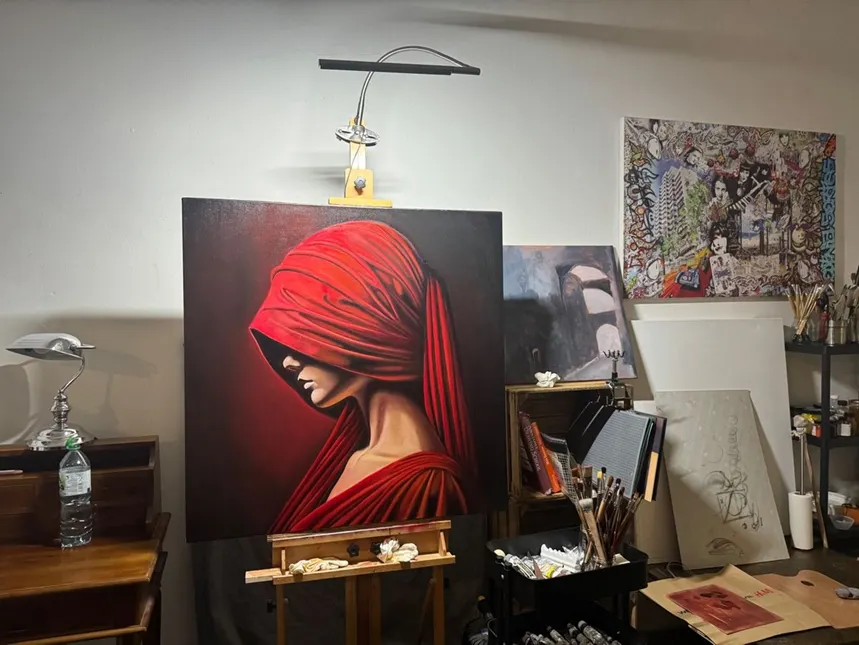
The reference for this painting took about two minutes to produce. I gave an image generator a prompt, tried a few variations and chose a woman wrapped in deep red fabric, part of her face in shadow. Then I stretched a large canvas, mixed my oils and began painting. By the time I wrote about it in March, I had put roughly a hundred hours into the canvas. It was still unfinished.
Those timings describe different jobs. The generator supplied a composition I wanted to work with. At the easel, I had to decide how to make a painting from it, using my materials and the skills I had. The digital reference made it easier to begin. The decisions involved in applying paint remained ahead of me.

A useful reference
What I value in image generation is the speed of exploration. I can vary the mood, arrangement and colours before committing to a composition. For this painting, I was looking for a particular balance between the visible face and the concealing fabric, between light and shadow. I liked the reference as a digital image in its own right.
I also wanted to work in oil and learn through making the painting myself. That required choices the reference could not settle for me. A patch of colour on a screen does not tell me how thinly to apply a particular mixture. Nor does it tell me what another glaze will do to the layers already on my canvas. Those questions arose during the work.
Decisions in layers
I began with an imprimatura, a thin wash of burnt sienna that toned down the white canvas. Over it, I made an underpainting in umber and white to establish the values, the relative lights and darks on which the composition depended. Colour followed through transparent and semi-transparent glazes. The fabric, skin and shadows each needed attention over several layers.
The red was built from five or six slightly different layers. Each application changed the appearance of what lay beneath it, so choosing a colour also meant judging the thickness of the paint and the state of the surface. A single fold of fabric could occupy an evening. Sometimes there were three days of drying between one layer and the next.
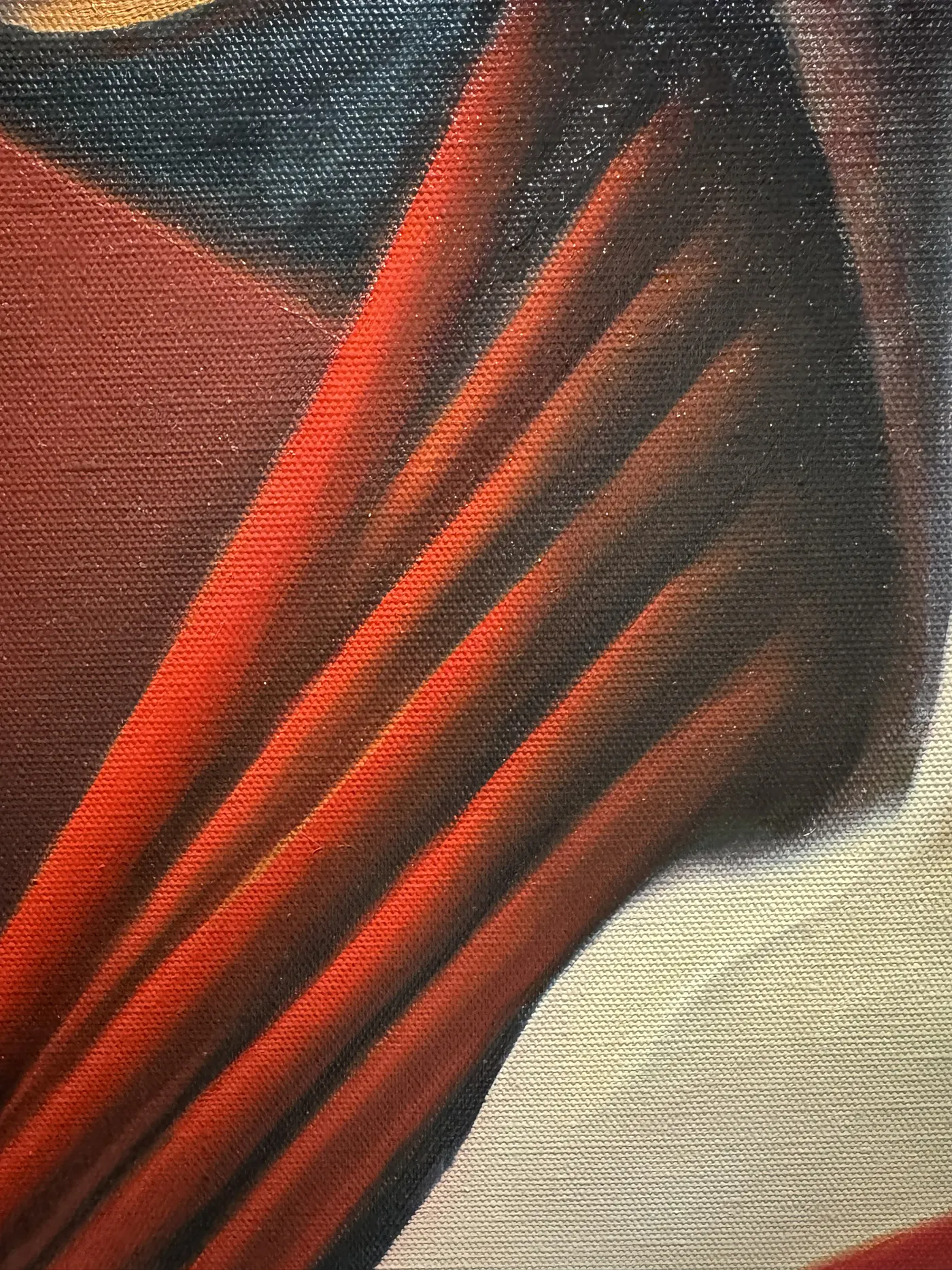
I learned from what happened on the canvas. Working too soon could leave a muddied surface and cost a week, and I had experienced weeks like that. A sound plan did not remove the need to examine the actual paint before continuing. Waiting became part of the work rather than an interruption I could schedule away.
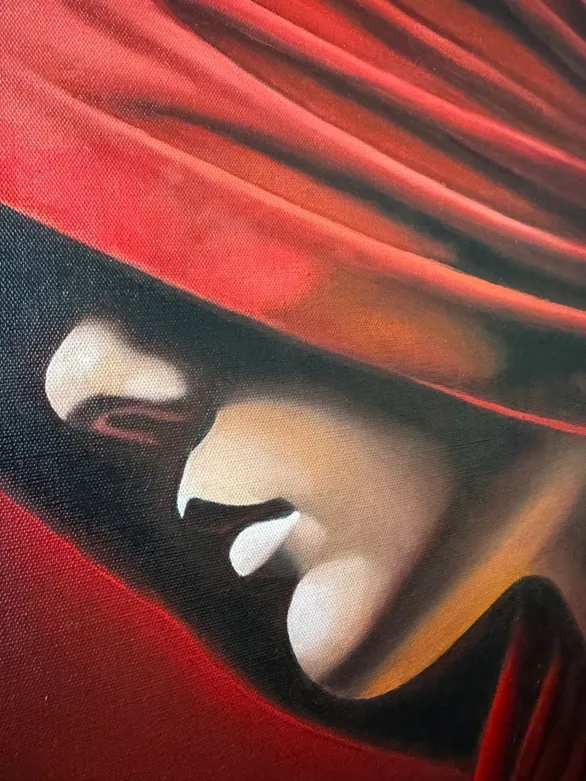
One detail of the face accounted for about fifteen hours. A warm ground was followed by a cool mid-tone, a warm highlight and a final transparent glaze. Each layer needed to dry before the next could go on. The reference remained useful, but the next action depended on the condition of the painting in front of me.
What the hours meant
A hundred hours is not a certificate of quality. Spending longer does not necessarily produce a better painting, and fast tools do not make a digital work worthless. In this case, mixing the paint, observing the result and gradually improving it were part of what I wanted to do. Measuring only the time needed to obtain a displayable image would miss much of that purpose.
In March, the work still needed glazes on the fabric, attention to the shadows and final highlights. I was describing an attempt with unresolved problems. I had not established whether the painting would achieve the effect I wanted. That unfinished state matters to the account because it shows how much learning and judgment remained after I had a usable reference.
Choosing what to automate
This distinction helped motivate FireScore, which I developed with Silke Rengstorf. Painting is work I find fulfilling. I was far more willing to hand over much of the data-migration work mentioned in my original account. That contrast describes my preferences, not a ranking that everyone else must share.
Someone else may value the same tasks differently. When introducing technology, I therefore want to understand how the people affected view the work being changed. Technical feasibility sits alongside questions about relief from unwanted tasks, skills and the activities a person deliberately wants to keep doing. My experience at an easel cannot answer those questions on behalf of a workforce.
My essay on AI and judgment considers a related division of work in decision-making. There the materials are evidence and reasons, rather than paint. In both settings, I want to be clear about the contribution I ask of a tool and the work I need, or choose, to retain.
The purpose of the work should determine what gets automated.