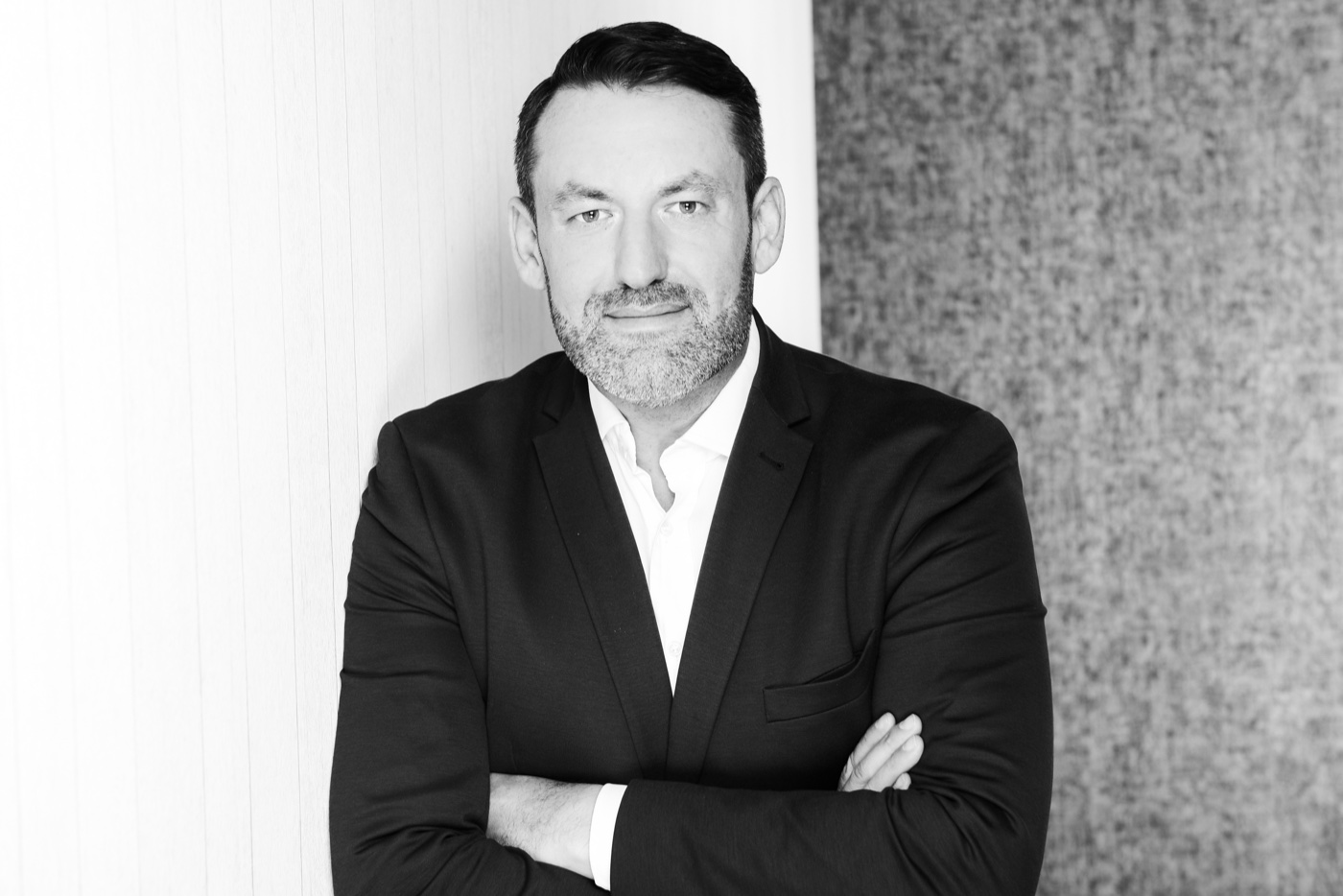
Michael Kupermann
Programme direction · Technology & Architecture · DACH

Technology is the tool.
People are the goal.

I've spent thirty years running technology programmes in telco, financial services, manufacturing and the public sector. The work I take now is the kind where architecture and change have to sit in the same room, on infrastructure that can't be paused, with P&L on the line.

Based in Düsseldorf Active since 1995 Languages DE · EN · RU

How I work with you.

Most engagements I take on begin with the same gap, between what the business says it is doing and what is actually happening on the ground. Strategy that never made it through to delivery, or delivery that has drifted from the original intent. I plan with real estimates rather than the numbers the room wants to hear, and I name risks early enough that the programme still has room to act on them. The usual engagement shape is an embedded executive mandate. I sit in the leadership layer from day one, working directly with shareholders, line management, finance, HR, IT, sales and marketing, service, procurement, vendors, and the Betriebsrat, and I leave when the organisation can carry the work without me. Where an embedded role isn't the right shape, I take strategic advisory instead.

Recent work

Showing items · newest first
2026 — ongoing
Programme · Technology & Architecture · Leadership

Active consulting mandate — tier-1 telco (fibre / Glasfaser), DACH

Currently engaged, 2026 ongoing. I hold a senior programme role at a tier-1 fibre / Glasfaser operator in DACH, doing technology and architecture consulting with leadership responsibilities inside the programme across field-operations coordination and stakeholder alignment. Details sit under NDA, and a walkthrough is available after NDA.

Active mandate · walkthrough on request
active mandate
April 2026
Side project · Open Source

Throughline — persistent memory for Claude Code

The problem. Claude Code has built-in memory (CLAUDE.md, a capped MEMORY.md, transcripts on disk), but most of it is unsearchable, size-limited, or never loaded into a new conversation. Long-running work still re-derives the same decisions and re-asks the same questions I thought the project had already answered. Throughline widens that memory into a searchable, inspectable layer that persists across sessions and runs on my own machine.

A local memory layer for Claude Code. Postgres with pgvector (HNSW indexes) for semantic search across sessions; embedders configurable between OpenAI text-embedding-3-small and Ollama for fully offline use; an MCP server exposing ten tools to the client. A reflection engine periodically deduplicates, resolves contradictions, decays stale entries, and consolidates the knowledge graph. Transcripts are redacted against sixteen patterns (API keys, tokens, private keys, emails, home-directory usernames) before extraction. Runs entirely on the user's machine.

Open source · github.com/mkupermann/throughline · Live demo (kupermann.com/memory/) ↗
pythonpostgres pgvectormcpclaude
2026 — ongoing
Program · Open Source

Modern data stack in production — open-source DWH with local AI

The problem. Most data warehouses either send AI queries out to a US-cloud API or skip AI altogether. For a mid-market DACH client with DSGVO constraints, competitive-data sensitivities and licence-cost pressure, neither option works. What we built instead was AI that runs on the warehouse itself, on the client's own infrastructure, with audit trails and no data leaving the building.

Production data warehouse for a mid-market DACH client. A read-only ki_middleware gives local AI safe, audited access to the warehouse — no request leaves the client's infrastructure. dlt pipelines ingest CRM, ERP and Excel-controlling data into a PostgreSQL DWH with thirty-one governed views; Dagster orchestrates; Metabase visualises. A nightly sync into an open-source CRM gives the business a documented exit path from its incumbent SaaS. Built to retire per-seat BI and CRM licences. Containerised, ADR-documented, with an eight-chapter operator handbook and a DSGVO security policy. Open-source throughout.

Client: mid-market DACH client · digital-transformation strategy · private repository, walkthrough on request
local aidagster postgresmetabase digital sovereignty
2025 — 2026
Mandate · Technology Leadership

Head of Technology — mid-market DACH technology firm

I led technology strategy and operations through a phase of organisational transformation. The priorities were closing the strategy-delivery gap and modernising the tooling that was holding the business back, while the in-flight programs had to be kept stable at the same time. Specifics on team sizes inherited, targets and adoption metrics are available on request under NDA.

Client: mid-market DACH technology firm · Technology leadership mandate · Düsseldorf
technology leadership transformationmandate
August 2025
Experiment · Open Source

German LLM from scratch — a pedagogical build

The problem. Most introductions to transformers use English, and most off-the-shelf models treat German as an afterthought. Neither helps anyone who wants to understand why attention behaves differently for a language with compound words, four cases, and verb-final subordinate clauses. This repo is the from-scratch build that makes every component legible.

A ground-up transformer for German, written to keep a gestalt understanding of what these systems actually do. Six tutorials walk through transformer mechanics, attention, feed-forward layers, German-specific tokenisation, the training loop, and data collection; a mini-dataset builder and training script sit underneath. Runs entirely offline.

pythontransformers training from scratchdigital sovereignty
March 2025
Open Source · ML Tool

EquiML — fairness audits for ML datasets

The problem. Fairness tooling for ML is scattered across libraries — one for metrics, another for constraints, a third for explainability. Every audit I ran turned into the same copy-paste glue code. EquiML is the three-command pipeline that replaces it. One dataset goes in, a report comes out, the accuracy-vs-fairness tradeoff made explicit.

A command-line tool wrapping fairlearn, SHAP, and scikit-learn into one pipeline — load, detect bias, train a fair model, compare results. HTML report, metrics as JSON, CLI and Python API. CI-tested, MIT-licensed.

pythonfairlearn shapml fairness
2022 — 2024
Mandate · Managing Director

Managing Director, CRM & Data — mid-size German IT services firm

Managing-director mandate, two and a half years. Refocused the business toward CRM and larger B2B accounts, set up a CRM consulting practice, added offshore delivery capacity, and brought AI into the delivery process. Material EBITDA improvement over the period; figures available on request under NDA. M&A screening and negotiations alongside.

Client: mid-size German IT services firm · Managing-director mandate · Reported to founders and investors
leadershipcrm m&amandate
2021 — 2022
Leadership · Data

Head of Data Solutions — European independent index provider

Led the Data Solutions organisation for an independent European index provider. Redesigned the data architecture in parallel with live operations, introduced ITIL v4 and Six Sigma (VoC, CtQ, KAIZEN), and set up a data governance framework fit for the regulatory environment.

Client: European independent index provider
data platformgovernance itilsix sigmafintech
2019 — 2021
Program · Global CRM Migration

Global CRM Cloud Migration — tier-1 global asset manager

Program lead on the migration of local sales systems into a unified cloud CRM on Microsoft Dynamics 365 / Azure. Five main regions (US, Hong Kong, France, UK, Germany) ran parallel cutovers; fifteen country sites in total. Sales processes reworked during the migration, sponsor coalition anchored in the regional heads. Delivered to plan across the five regions; no sales-cycle outage.

Client: tier-1 global asset manager
cloud migrationdynamics 365 azureglobal program
2016 — 2019
Program · Compliance Platform

Investment Restrictions Program — tier-1 global asset manager

Three-year program migrating asset- and investment-management locations to Bloomberg AIM (Compliance Manager and Violations Manager). Responsible for test planning and governance across trading desks. Adoption protected through parallel-run periods and desk-level reinforcement. Three years, zero live-portfolio incidents.

Every tolerance-breach alert in the run pointed to a person on a desk — a trader who had to stop what they were doing and work with us. That's the adoption cost behind the zero-incident line, staffed for and reinforced week by week.

Client: tier-1 global asset manager
compliancebloomberg aim financetest governance
2010 — 2021
Company · Co-Founder & MD

Co-Founder & Managing Director — Solit Finance

Co-founder and managing director of a consultancy that grew to 110 people over a decade. Led the operational business; acquired, ran, and worked on client programs in financial services and telecommunications. Eleven years of company building alongside hands-on delivery. Solit was the principal vehicle through which the 2010–2021 client programmes listed here were delivered; the mandates from 2022 onward are independent engagements.

Those eleven years shaped the lens through which every mandate since has been read. I ran the P&L, learned the craft of sponsor coalitions, made the hard calls on when to invest and when to stop, and ran M&A screening and negotiations alongside client delivery.

Firm: Solit Finance GmbH · Founder / Managing Partner
entrepreneurshipp&l consulting
2010 — 2015
Program · Next Generation IT

Next Generation IT Architecture — tier-1 European telco group

Principal consultant on the group's Next Generation IT initiative, part of the program-management leadership team. Transformation of the AppCom architecture (CRM & Customer Data Platform) across five countries, cross-country IT licence management, and the design and rollout of the NG IT architecture in Hungary and the Czech Republic. Infrastructure advisory to the regional CTIO/CTO.

Client: tier-1 European telco group
telcoarchitecture infrastructurestrategy
2006 — 2010
Leadership · CRM Practice

Principal Consultant & Head of CRM West — top-tier German IT consultancy

Led an 80-person CRM consulting practice for Germany's west region. Principal consultant on CRM analyses and implementations, with business-development and P&L responsibility for the practice.

Firm: top-tier German IT consultancy
crmpractice lead dax/mdax

How I approach programme work.

Eight things I've learned by getting at least one of them wrong on a real mandate. Not a framework. Not a method. Eight habits that stuck.

01

How I frame problems

In my experience most engineering and transformation waste comes from solving the wrong problem fluently. I try to write the problem statement before any slide or line of code, sharp enough that I would catch it later if somebody described the work differently.

02

The walls I look for before scoping

Budget, team size, time, risk tolerance, regulatory constraints. Those are the walls of the room I'm actually building in, and every programme I've watched fail has treated at least one of them as optional.

03

How I size the first build

I aim for the cheapest version of the work that can generate real data, rather than the most complete one or the most elegant. Once that data is in, the rest of the programme iterates on what the data says, not on what the room thinks.

04

Why I bias toward reversibility

Blast radius matters more to me than cleverness. When I've had to pick between two designs I didn't fully trust yet, I've taken the one I could walk back in sixty seconds over the one I couldn't walk back at all.

05

What actually decides a programme

Every migration, platform and CRM rollout I've led succeeded or failed on change management rather than on the tool itself. I've learned to treat tools as swappable and organisational habits as the thing that actually costs to move.

06

Where I find the real work

Strategy without a delivery plan rarely lands, and I've watched good delivery plans lose direction when the strategy wasn't at the table. The work I find worth taking tends to sit where both sides have to give ground to each other.

07

How I think about vendor lock-in

Every architectural decision I sign off on locks in a supplier alongside the data. Licence exposure and exit cost are first-class constraints for me, which usually means open-source where feasible, documented exit paths where not, and DSGVO as a default rather than an afterthought. The question I work from is which tool I can afford to leave when the contract changes shape, and that's a narrower test than what the industry usually asks.

08

The question I keep asking

My method is one question asked continuously: what is the next risk, and can I avoid or mitigate it? I budget and staff reinforcement from day one of a programme, rather than letting it become the line item a steering group rediscovers at month six when it's already too late to act.

Background,
in brief.

What the work
is really about
I lead transformations on businesses that can't be paused for the change. One typical shape is a sales-system migration running parallel cutovers across regions, while sales cycles keep going uninterrupted. Another is a data platform rebuilt while the index keeps publishing. The programmes have to land on time with the lights staying on, which is most of what makes them interesting.
Where I'm
strongest
Both C-level and operational — I'll sit in the board meeting and the engineering room in the same week, sometimes the same day. The mandate history covers the C-level side. The open-source repos alongside are there so the operational claim is verifiable, not rhetorical.
The pattern
across the work
The through-line is continuity. Clients come back to me — sometimes a decade later, in a different role at a different firm, with a new problem. What I actually do once they're back is put strategy and execution in the same room and build the delivery machinery that keeps them there, either under an executive mandate, as programme lead, or as board-level advisor. Live operations throughout, because there's rarely a graceful way to pause.
What's unusual
about the mix
I build AI tooling for the same kind of organisation that has to adopt it, and I ship it open source. Throughline came out of that intersection — the memory problem you only see after watching enough change programmes forget what they had already learned.
What comes
back
Across the engagements above, what clients say afterwards tends to hit the same three notes. Estimates that land close to reality. Risks called early, before the programme has a reason to look for them. And answers delivered plain, even when the answer isn't the one the room was hoping for. Those calls hold up later.
What I got
wrong
One mandate I couldn't deliver. I misread the political structure at the client, underestimated how fractured the leadership coalition really was, and assumed sponsorship where there was only tolerance. The work stopped landing, and I chose to leave rather than keep producing outputs that wouldn't stick. What I took from it, and I now insist on before accepting a new mandate, is reading the coalition before the problem.
A quiet
signal
A senior client from thirteen years ago moved to a new organisation and asked me back for a new mandate.
A specific
focus
Digital sovereignty is the thread I keep pulling. The work is reducing vendor and licence dependency, designing clean and documented exit routes out of SaaS monopolies, and keeping DSGVO and GDPR-compliant data sovereignty as the default in every architecture I own. My framing is practical rather than ideological — I treat sovereignty as a cost-and-risk line item that belongs inside the architecture decision, not next to it as a policy afterthought.
Works-council
experience
I treat Betriebsrat engagement as design input. They contribute to workflow change, digitalisation scope and AI rollout decisions from inside the programme plan, rather than as a sign-off step near the end once most of the decisions have already hardened.
How I engage
The engagement usually takes one of three shapes: executive mandate at C-suite or head-of-function level, programme management as lead or director, or strategic advisory when an embedded role isn't right for the problem. P&L, M&A screening and board reporting are all comfortable ground from the eleven years I ran my own consultancy and the mandates since.
Stack
Hands-on (2025–2026) Python PostgreSQL + pgvector Dagster dlt Metabase Ollama (local inference) Claude API · Claude Code MCP (Model Context Protocol) Docker
Architected or led, last 24 months Microsoft Azure · Functions · KeyVault Google Cloud (GCP) Microsoft Dynamics 365 Dynamics Business Central HubSpot (Sales · Marketing · Service) Salesforce (Sales · Service) SAP S/4 · BW Knowledge-graph schemas
Deeper history (not current hands-on) Oracle Siebel · Fusion · eBusiness Bloomberg AIM Oracle · MS SQL · MySQL · MariaDB MongoDB · Firestore · Firebase Elasticsearch · Kibana TypeScript · Kubernetes
Methods & standards ITIL v4 (Service Manager) Six Sigma · KAIZEN PRINCE2 Scrum (PSM1) ISO/TÜV IT Documentation eTOM
Certifications
TOGAF · ITIL Service Manager · eTOM · Six Sigma & KAIZEN · St. Gallen Institute — Digitalisation & Migration · Systemic Resonance Coach (KOR®).
Languages
German (native) · English (C2, business) · Russian (conversational) · Hebrew (basic).
Writing
The catastrophe I keep waiting for — on the AI labour displacement that hasn't arrived where the macro forecasts said it would, and the inverse current the surveys aren't built to see. On Medium ↗.
100 hours of oil paint over an AI image — a lived reflection on where automation belongs and where it doesn't. On Medium ↗.
FIRE Score — a scoring model for make-vs-buy and tooling decisions in knowledge-work transformation. On Medium ↗.
Throughline — why it exists — a technical note on Claude Code's memory limits, what breaks in practice, and the design constraints that fell out. In the repo README ↗.
References
Named employers and clients are visible on LinkedIn. Two C-level references from the 2016–2021 asset-management mandates (Bloomberg AIM compliance platform and global CRM cloud migration, combined ≈ five years, fifteen country sites, zero live-portfolio incidents, on-plan delivery), callable after mutual interest and NDA.
Michael Kupermann
Michael Kupermann · Düsseldorf

If the technology is
the easy part —
we should talk.

I take on a small number of mandates and advisory engagements each year. They're usually transformations, turnarounds, or board-level work — the kind of situations where the technology turns out to be the easy part once someone's sorted out the organisation around it.

Currently on mandate. Small advisory engagements accepted now.